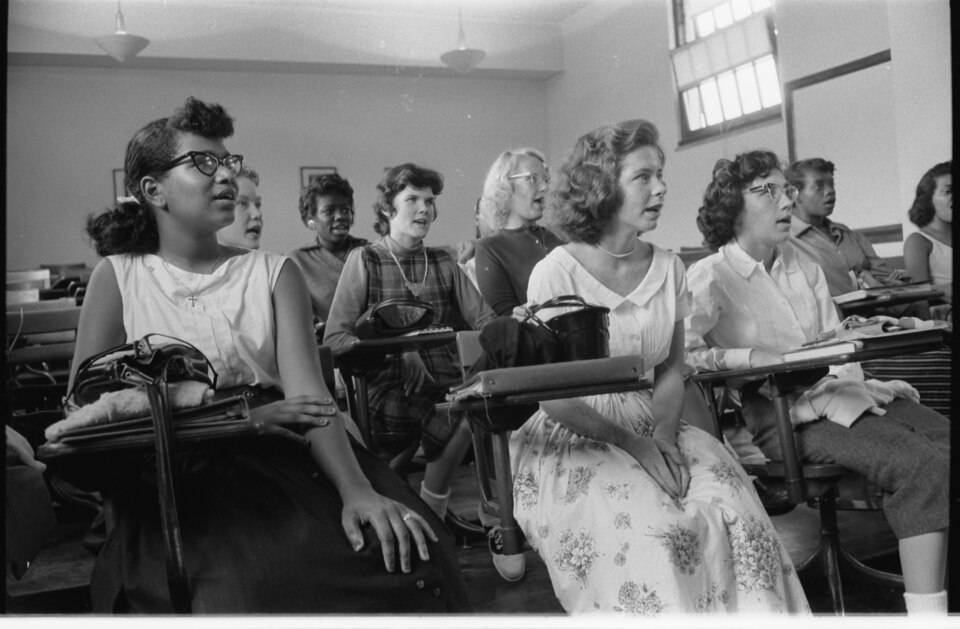
The American Nation in the Twentieth Century: The Declaration of Independence at 250, will be held at the University of Liverpool on 27 February 2026.
The Call for Papers is now open.
We are looking for institutions to host our Winter Symposium and Annual Conference in 2027
HOTCUS Updates
The American Nation in the Twentieth Century: The Declaration of Independence at 250
A one-day winter research symposium at the University of Liverpool, Friday 27 February 2026
To mark the 250th anniversary of the Declaration of Independence, HOTCUS, in collaboration with the History Department at the University of Liverpool, invites proposals for papers and panels that explore how nation, citizenship, and freedom were redefined in the twentieth-century United States. The ideals proclaimed in 1776 – liberty, equality, and self-government – remain central to American political culture but have been continually tested by social, political, and global transformations. The twentieth century provides a vital context for tracing how these principles have been reimagined to invoke, revise, and resist the nation’s founding promise.
The symposium’s keynote speaker will be Dr Emma Stone Mackinnon, Assistant Professor of Modern Political Thought at the University of Cambridge, whose forthcoming book traces the contested legacies of the U.S. Declaration of Independence and the French Declaration of the Rights of Man and Citizen in mid-twentieth century debates about race and empire.
We invite individual paper and panel contributions that consider how Americans have drawn upon the founding text to articulate new understandings of belonging, sovereignty, and democracy, and how these debates have shaped the historical imagination in or about the United States.
Possible topics include, but are not limited to:
- Race, citizenship and the unfinished work of emancipation
- Immigration, exclusion, and the boundaries of belonging
- Nationalism in wartime: mobilization and dissent
- Gender and in/dependence: woman suffrage, feminism, and work
- Indigenous resistance and claims to sovereignty
- America and empire: the projection of American ideals abroad
- Commemoration, pedagogy, and the historical uses of 1776
- Sovereignty, democracy, and the state
- The Declaration in political rhetoric, constitutional argument, and historiography
- American exceptionalism and global meanings of independence
Papers may address particular events, individuals, movements, or interpretive traditions that illuminate how the Declaration’s ideals were reworked across the twentieth century. We especially welcome proposals that situate these themes within broader historiographical debates on nationalism, liberalism, and the state.
Submission requirements: 250-word abstract and a one-page CV in a single document. Panels should be collated and include a brief overview as well as the individual abstracts and CVs. Submissions should be sent to events.hotcus@gmail.com by 10 January 2026.
We are pleased to announce that Thomas Cryer (UCL) has won the ECR Article Prize for his article, “‘A False Picture of Negro Progress’: John Hope Franklin, Racial Liberalism, and the Political (Mis)uses of Black History during the 1963” published in Journal of American Studies in 2024. In awarding the prize, the prize committee wrote the following:
In the lead up to the 1963 centennial of the Emancipation Proclamation, the Kennedy Administration commissioned historian John Hope Franklin to write a pamphlet chronicling the history of US civil rights since 1863. In this thoughtful and original article, Thomas Cryer recounts the ways that Franklin’s efforts were stymied and censored by government-appointed historians who sought to whitewash that history into a linear narrative of liberal progress. With a careful eye for detail and fluent prose, Cryer has shown the ways that the contestation over Black history revealed a much deeper logic of mid twentieth-century liberalism: “a broader non-reckoning with America’s white supremacist past.” In so doing, Cryer shows the enduring racial logics that shaped liberalism and its supporters—and the impact this had on the histories of the nation that they espoused. Cryer’s is an excellent article that compels us to reconsider the ways that racial liberalism prevents a historical and political reckoning with white supremacy.
We are also very pleased to award the HOTCUS Research Awards grants to defray the costs of research to the following recipients:
- Sophie Stanford, working on “Restorative Justice or Cold War Manipulation?: Situating Redress for Japanese Internment Within the Context of International Geopolitics During the Reagan Administration”
- Lucy Kelly, working on ““I want to fight the fight. I want my rightful place”: Queer Worldmaking in the American South, 1970-2000”
- Paula Murphy, working on “‘Whatever Happened to Unity?’ Co-Curation and Resistance in Hip-Hop’s First Decade”
BlueSky Latest Posts
Historians of the Twentieth Century United States (HOTCUS) exists to facilitate and promote scholarship in the field of twentieth century American history.
HOTCUS membership is open to scholars, students and teachers of twentieth century US history at all levels.
HOTCUS promotes the study of the twentieth century United States in four principal ways:
through an annual conference, which is intended to serve as a showcase for new research across the field of twentieth century American history;
through an annual winter symposium on a specific theme;
through HOTCUS panel presentations at major conferences;
and through the HOTCUS awards programme.